Arguing about the link between theory and praxis is a tricky issue, but nevertheless one could gather pretty good ideas when taking a look in the good old textbook. Yep, even when it comes to modernizing an ad strategy.
In the spirit of learning for the finals you sometimes
ask yourself: “When I´m going to use this? How come I have to learn all these
things?”. And then you realise why you should know the conclusion Paul
Lazarsfeld came to in 1940.
With the idea that the average person is more or less
always trying to skip the ads on TV, magazines and newspapers (of course when
using the media consciously and actively), the question of how to generally do
advertising arises. Mass media is here the wrong answer.
What Paul Lazarsfeld realises in his study on the
presidential election in 1940 in Ohio is that communication isn´t an
information transaction from the communicator to the audience, but something
way more complex: a flow, a two-step or a multistep one. Broadly speaking, it
means that recipients don´t receive information directly from media but from
(fictional) opinion leaders who know the ropes of the certain topic. These are people who are
highly interested in knowing every detail of the issue and are able to give a
broad outline to the various aspects and opinions of it by (mostly) bringing up
good arguments. Depending on the topic, an opinion leader may be a friend of
yours or a professional toward whom you´re turning when needing an advice or
help (this includes doctors, engineers, consultants etc.). So, what
should a target group look like?
Underlining the influence of interpersonal
communication, I believe that focusing on the opinion leaders concerning a
particular topic is an alternative way to promote a product or service. The
advantages of this idea are not to underestimate.
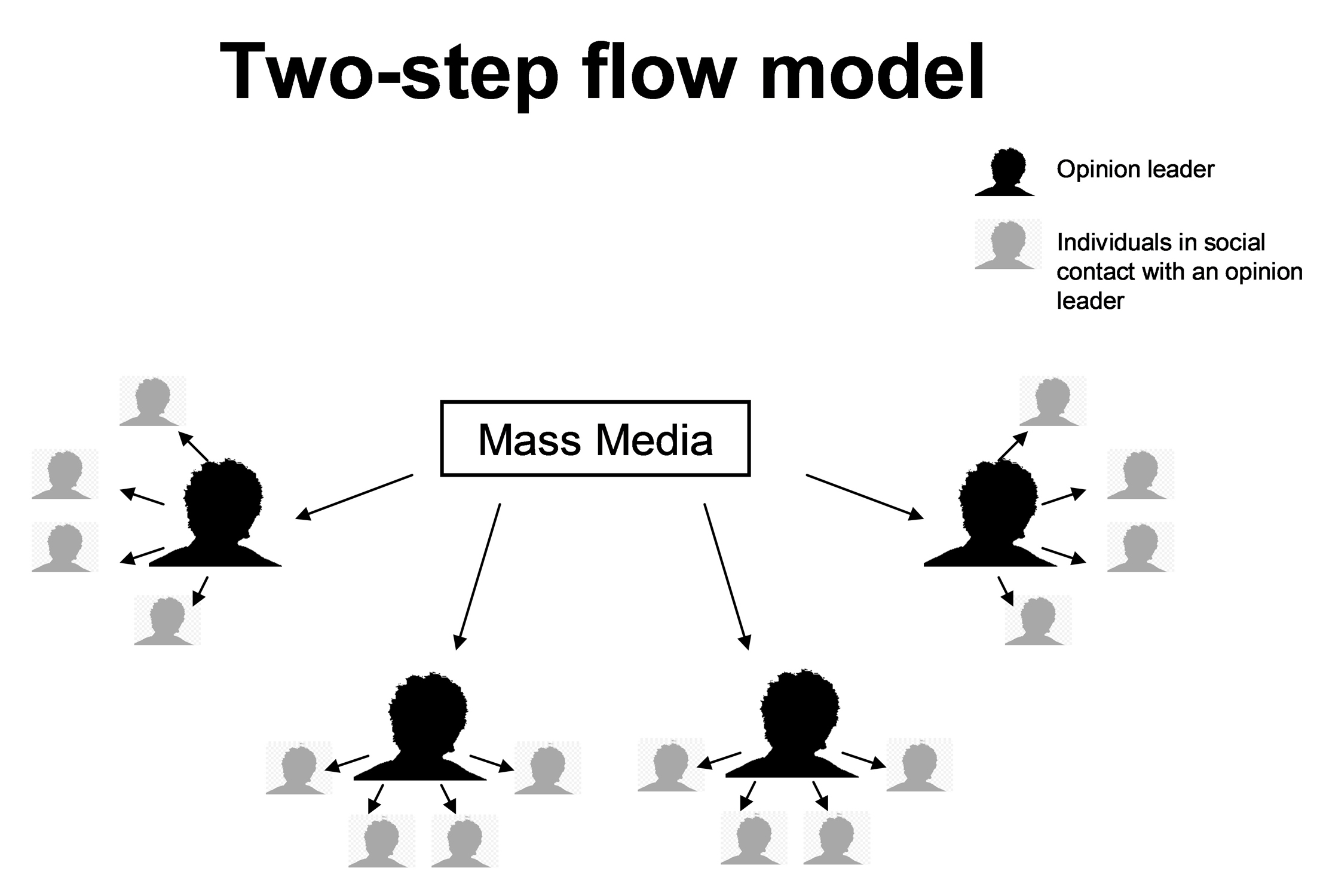
First of all, when concentrating on a smaller
recipient group, the communication towards it or between the group and the
communicator is way more flexible and efficient. Thus asking and answering
question, gathering ideas for updates and receiving feedback takes less time
and effort.
Another aspect is the definition of a target group
itself: even if knowing exactly what big audience you want to reach, you can
never know you´re reaching it in reality (before taking a look at the
statistics, of course). Concentrating on the opinion leaders as a first-order
target group may help you enhance the actual target group by letting the
opinion leaders inform and convince the people in their own social environment
of the advantages of your product or service.
And if these arguments aren´t strong enough, comparing
the human and finance resources needed for the classic and for this alternative
ad strategy, should help you take the decision if and how to promote.


Keine Kommentare:
Kommentar veröffentlichen